Authority framing
Made the expert angle clearer near the video introduction.

Case 06 · Landing Pages · 2026
Designed to clarify the promise, sequence proof more deliberately, and improve CTA readiness.
Crafted a VSL-driven supplement landing with cleaner authority framing, objection handling, and conversion-focused flow.
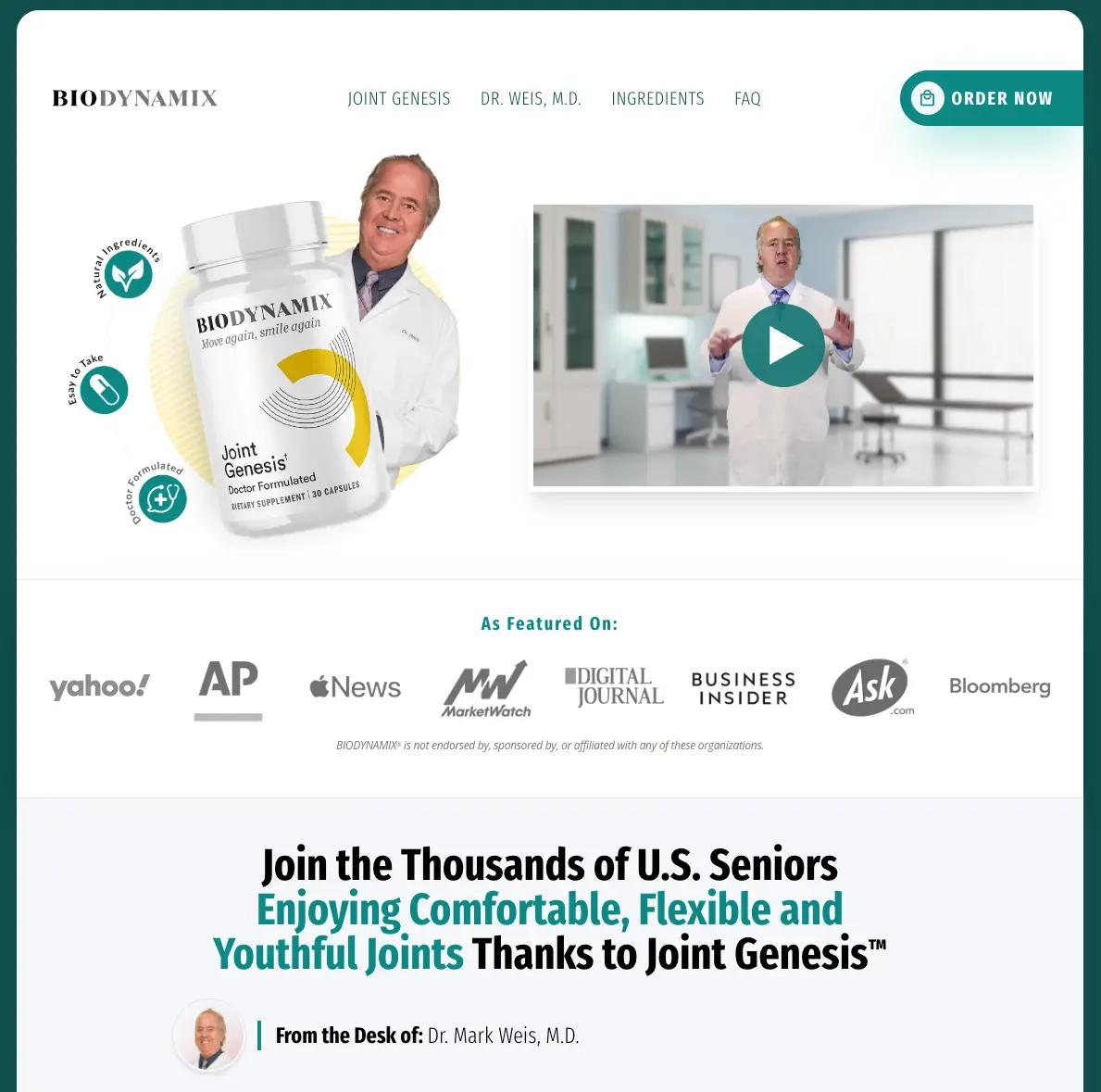
The Challenge
Users needed stronger confidence before reaching the CTA. The page had to handle objections earlier, frame authority more clearly, and make the transition from video to action feel easier.
Why this matters: VSL pages stall when authority is implied but not structured into the decision path.
Constraints (selected)
Authority Strategy
The UX focused on objection handling, credibility timing, and cleaner CTA progression across the VSL-led flow.
Designed to make the page feel more convincing before the final ask.
Authority framing
Made the expert angle clearer near the video introduction.
Objection handling
Organized reassurance around the doubts users are most likely to carry.
Proof structure
Reduced scattered credibility and made validation feel stronger.
CTA progression
Improved the handoff from persuasion to conversion action.
System Thinking
Why this matters: authority only helps conversion when the page translates it into structured confidence.
Landing strategy
The section flow was rebuilt around buyer objections, trust-building blocks, and cleaner CTA transitions so the VSL could hand off to action more smoothly and with less hesitation.
Trust Building
Helps users process the promise faster, trust it sooner, and feel more ready to act.
Clearer first-screen framing
Made the promise easier to understand early.
Cleaner proof cadence
Used reassurance where belief needs support most.
Lower-friction reading path
Reduced section noise so the story feels easier to follow.
Stronger CTA timing
Placed actions closer to the moments users are most prepared.
Why this matters: objection handling and CTA timing matter more than simply adding more proof.
Problem: Users need a reason to trust the video before its persuasive content can work fully.
Design action: Improved authority framing near the VSL introduction.
Why it matters: Stronger early credibility lowers skepticism sooner.
Problem: Unstructured objection handling creates friction in long-form persuasion.
Design action: Reorganized objection blocks so doubts are addressed more deliberately.
Why it matters: Users convert more easily when key questions are answered earlier.
Problem: Scattered validation weakens the impact of authority.
Design action: Grouped credibility signals into stronger supporting moments.
Why it matters: Concentrated proof makes the page feel more convincing.
Problem: The jump from persuasion to action can feel abrupt if the page does not prepare users well.
Design action: Tightened the transition into CTA zones and reduced distractions near action points.
Why it matters: Cleaner handoff improves completion confidence.
Decision Flow
Why this matters: strong VSL pages still need clearer handoff points between persuasion and conversion.
VSL Entry
Improved authority framing around the video introduction.
Strong first credibility lowers early skepticism.
Objections
Structured objection-handling blocks with clearer narrative pacing.
Users convert faster when key doubts are answered early.
Proof
Consolidated credibility signals and benefit validation modules.
Scattered proof weakens persuasion in long-form pages.
CTA
Tightened CTA transitions and reduced visual distractions near action zones.
Cleaner action zones improve completion confidence.
Expected Impact
No fake metrics. The expected impact is framed around stronger authority perception, better objection handling, and cleaner CTA readiness.
Stronger perceived authority
Reduced hesitation from objections
Cleaner VSL-to-CTA progression
Higher conversion readiness
Observed business impact
Strategic improvement
Data note
Hard performance metrics were not publicly documented. Impact is described through the VSL conversion logic the landing was designed to improve: authority, objection handling, and CTA readiness.
Related services
Next Steps
If your pages look good but still underperform, I can audit the flow, clarify the structure, and define a cleaner path before design execution.
Typical response within 24h